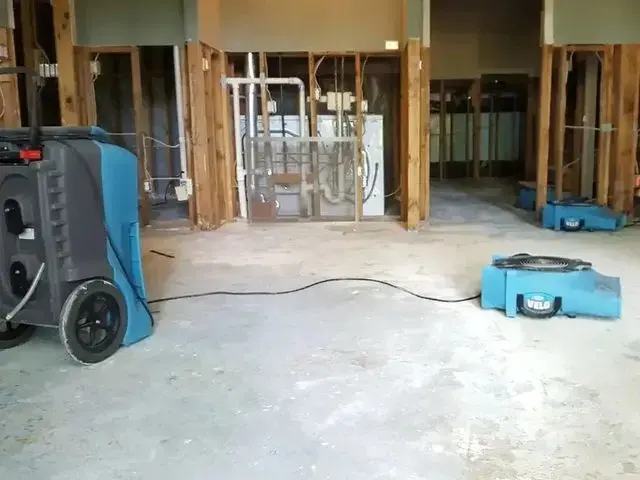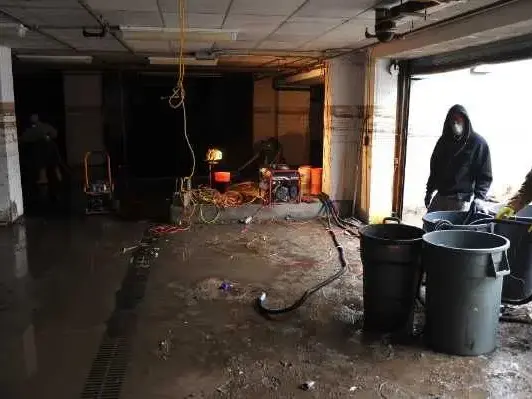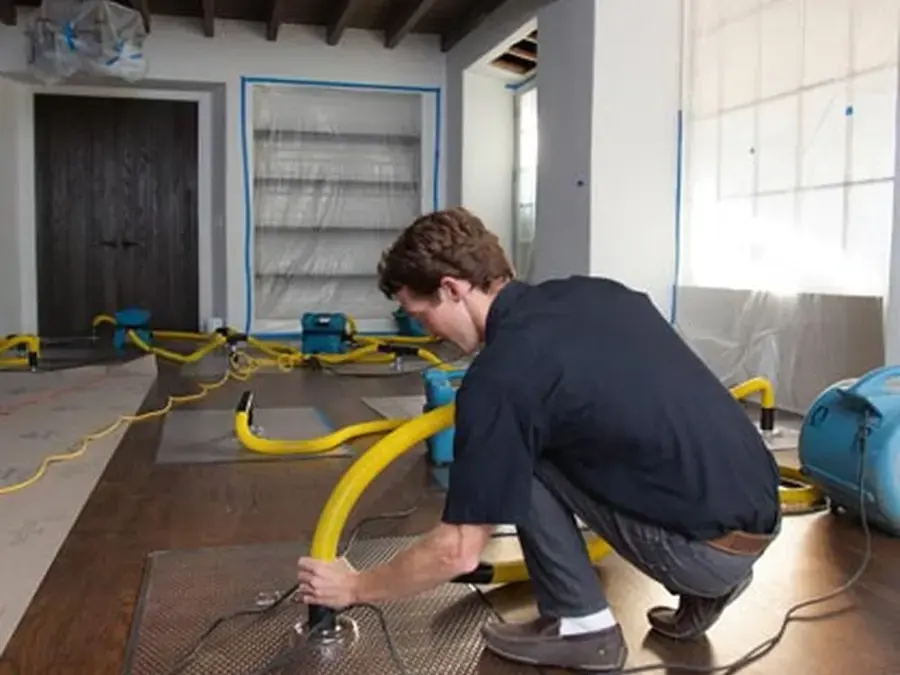
Extraction is the cheapest part of any dry-out and the part that saves the most. Every gallon pulled out as liquid is a gallon the dehumidifiers never have to pull out of the air, which is why the extraction crew works before any fan goes down. In Largo homes that usually means tile or terrazzo over a concrete slab, carpet in bedrooms, and drywall that wicks water up from the floor.
Why fast extraction matters in Largo homes
Most Largo houses built from the 1960s to the 1980s sit on a slab with tile, terrazzo or vinyl on top. Water does not soak into the slab quickly, so it spreads sideways under baseboards, into closets and under cabinets. Carpet pad holds water like a sponge. The longer it sits, the more of it moves into drywall and wood trim.
- Carpet pad and cushion hold several times their weight in water
- Drywall wicks water upward, often 12 to 24 inches above the floor
- Particleboard cabinet bases swell and do not recover
- Humid Pinellas air slows natural evaporation to a crawl
How the extraction crew pulls the water
The tech who does the walkthrough maps the wet area first with pinless meters and a thermal camera, so the crew knows where water went behind walls and under cabinets.
- Truck-mounted extraction for large volumes, portable units for condos and upper floors
- Weighted extraction tools that press water out of carpet and pad
- Squeegee and wand passes on tile, terrazzo and hardwood
- Moisture readings logged at the start so drying progress can be proven
Once the floor is extracted, air movers and LGR dehumidifiers go in for structural drying. If the water came from a toilet, a drain or rising floodwater, the job moves to Category 3 sewage protocol instead.
Tile does not mean the floor is safe
Water under tile and behind baseboards stays hidden. A wet grout line or a soft baseboard usually means the moisture map is bigger than the puddle you can see.
Before the crew gets there
Shut off the source if you can do it safely, keep people and pets out of standing water near outlets, and photograph everything before moving it. The Ready.gov flood safety page covers electrical safety, and Pinellas County posts storm and flooding updates at pinellas.gov.