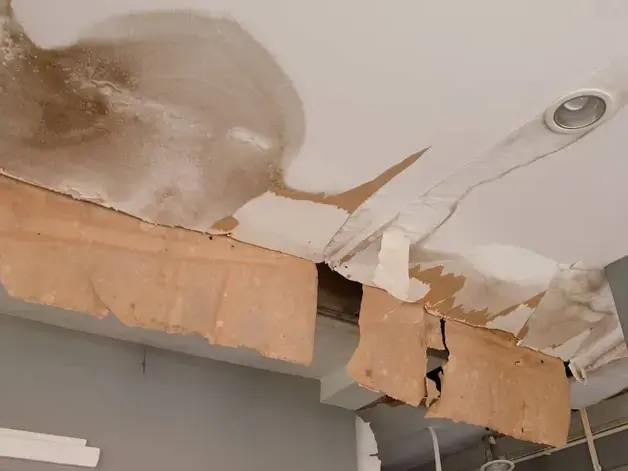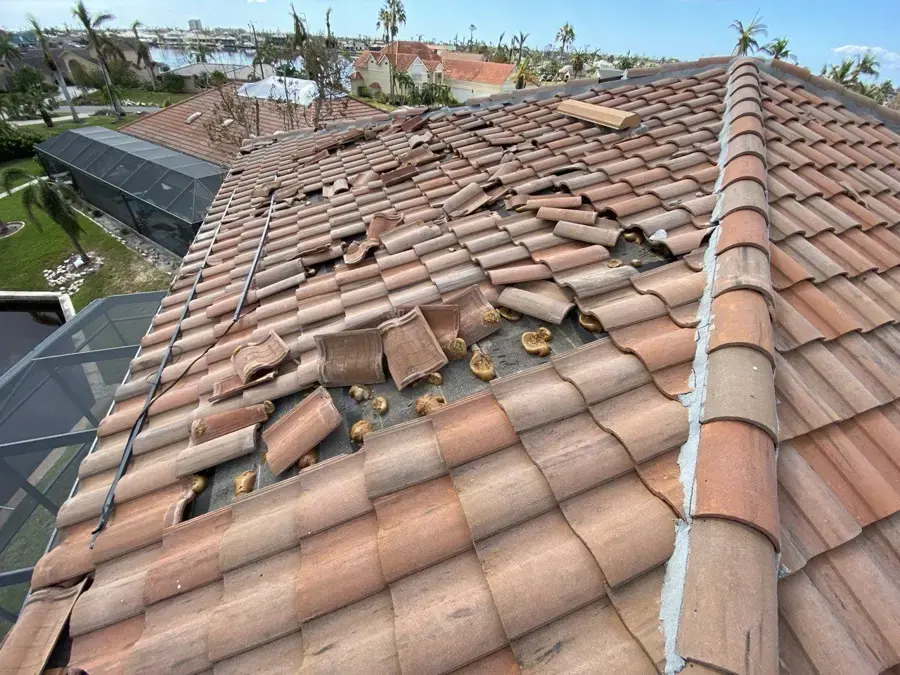
Largo does not have to take a direct hit to get roof leaks. The outer bands of a tropical system bring hours of wind-driven rain that pushes under lifted shingles, cracked barrel tile and flat-roof seams. After the 2024 storms, attic and ceiling leaks were one of the most common calls across Pinellas County.
How storm water gets in
- Shingles lifted or torn off, exposing the underlayment
- Cracked or displaced barrel tile on Mediterranean-style roofs
- Flat and low-slope roof seams on Florida rooms and additions
- Failed flashing around vents, skylights and chimneys
How the inside is dried
A roofer or a tarp crew stops the water from above. Inside, the tech who does the walkthrough checks the attic, the ceilings and the tops of walls with a thermal camera, because storm water spreads along the top plates.
- Soaked attic insulation removed and bagged
- Ceilings drained, then dried or cut out where they sag
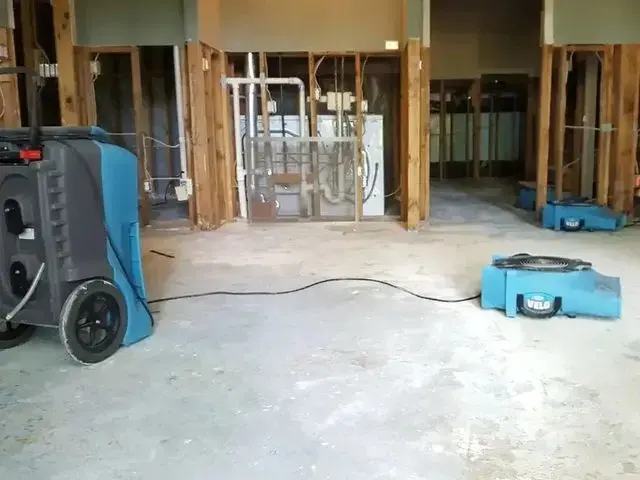
- Wall cavities opened where water ran down inside
- Air movers and LGR dehumidifiers with the house kept closed
Rain that ran through a dirty attic is usually treated as Category 2. If the storm also pushed water in at ground level, that is Category 3 and follows storm flood cleanup.
Tarp first, then document
Photograph the roof and every ceiling stain before a tarp goes on. Many carriers expect reasonable steps to stop further damage, and the photos show what the storm did.
Storm season references
Track systems through the National Hurricane Center, and use Ready.gov hurricane steps to prepare. Wet ceilings follow the ceiling leak process.