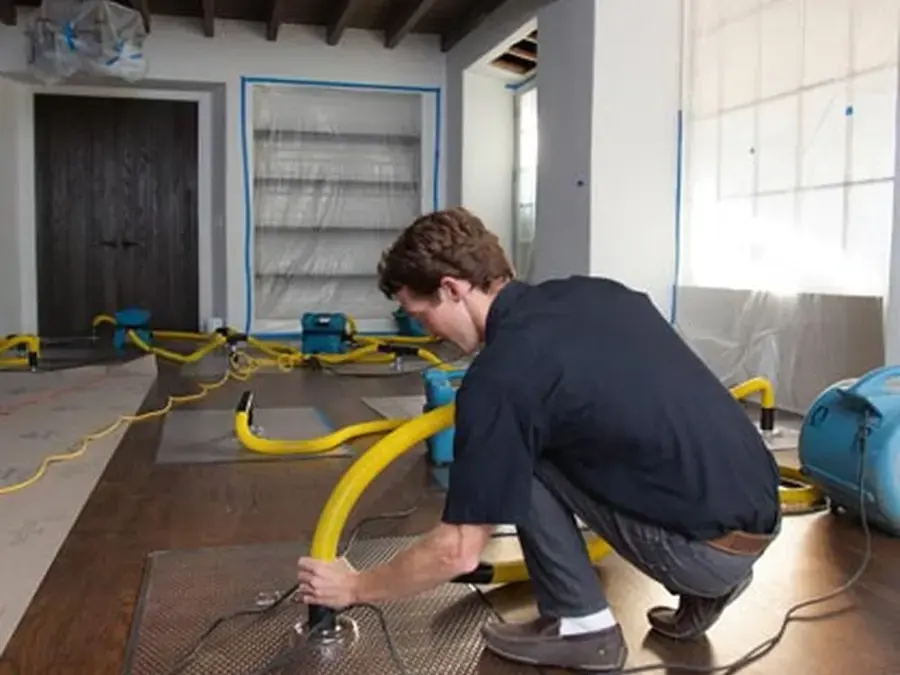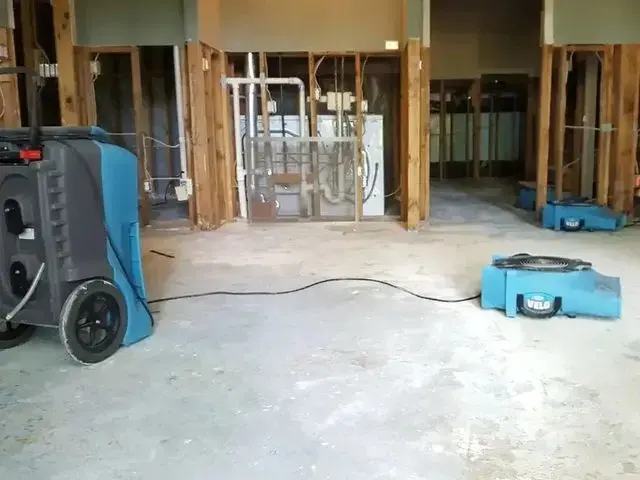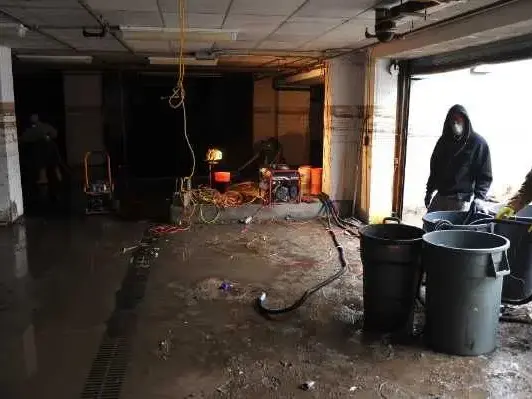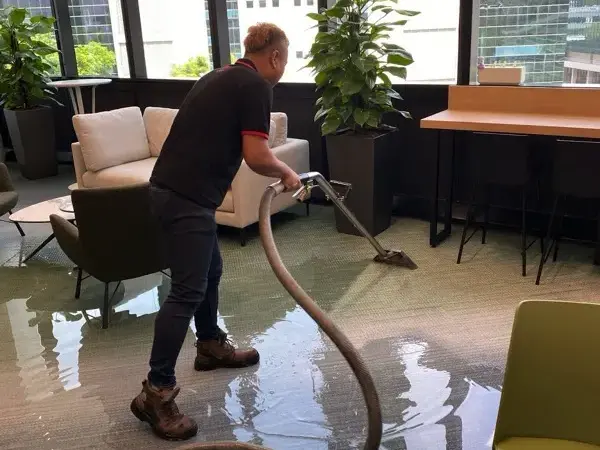
Commercial losses in Largo range from a sprinkler head in an office on Ulmerton Road to storm water in a strip center on Seminole Boulevard or a supply line in a medical office near Largo Medical Center. The drying science is the same as a home. The difference is scale, access and the cost of downtime.
Common commercial water sources
- Fire sprinkler line breaks and accidental head discharge
- Roof drains and flat roofs overwhelmed in summer storms
- Restroom supply lines and water heaters in tenant spaces
- Storm runoff entering at storefront doors
How a commercial loss is handled
The response team meets the property manager, maps the loss and sets a plan that keeps as much of the building working as possible.
- Truck-mounted extraction for large carpeted areas
- Phased drying so unaffected areas stay open
- Containment around work zones in occupied buildings
- Commercial-size LGR and desiccant dehumidification
- After-hours equipment checks where needed
Category 3 water from storm runoff or restrooms follows the sewage protocol. Large open spaces dry faster with the structural drying plan sized to the whole volume of air.
Have a shut-off map
Know where the main water valve and the sprinkler control valve are, and who has keys. That saves the most water in the first minutes.
Documentation for owners and tenants
Commercial claims often involve the building owner, tenants and several carriers. Moisture maps, daily psychrometric logs and timestamped photos keep everyone working from the same record. The U.S. Small Business Administration lists disaster help for businesses after declared storms.