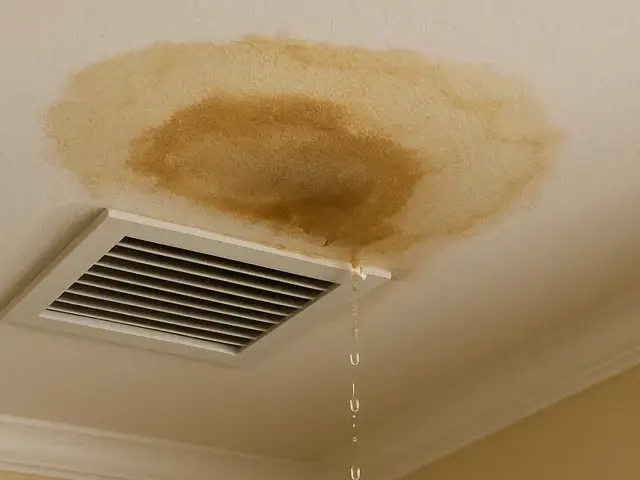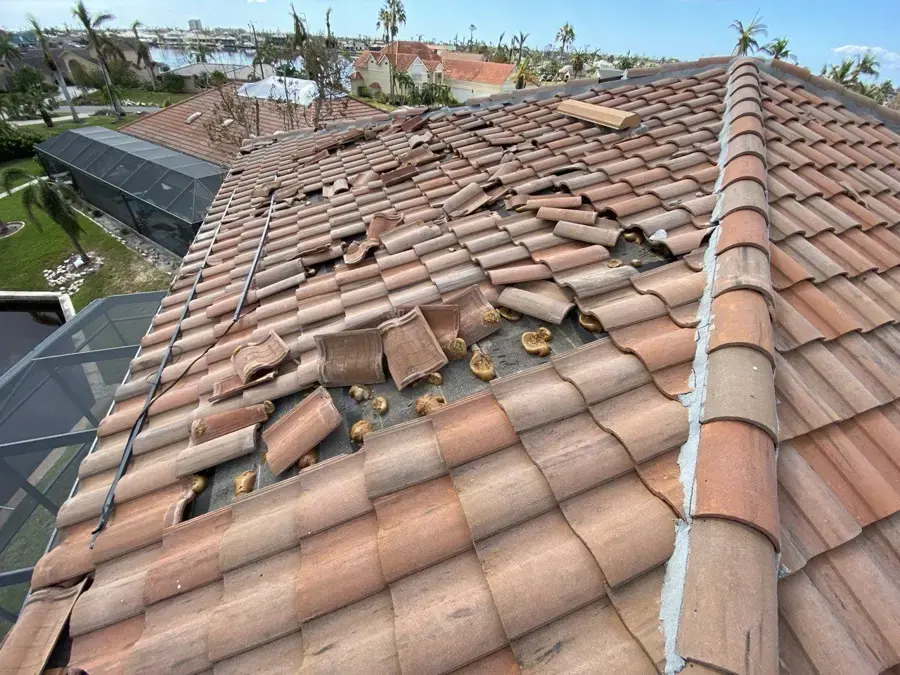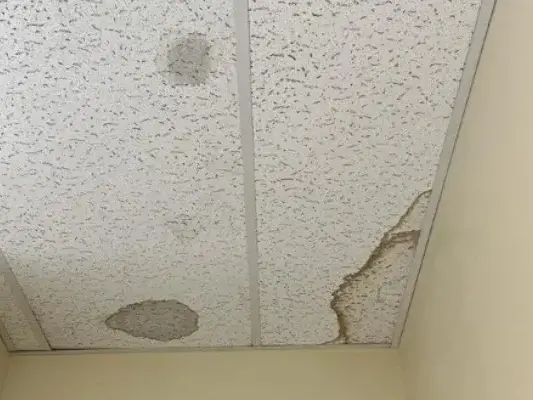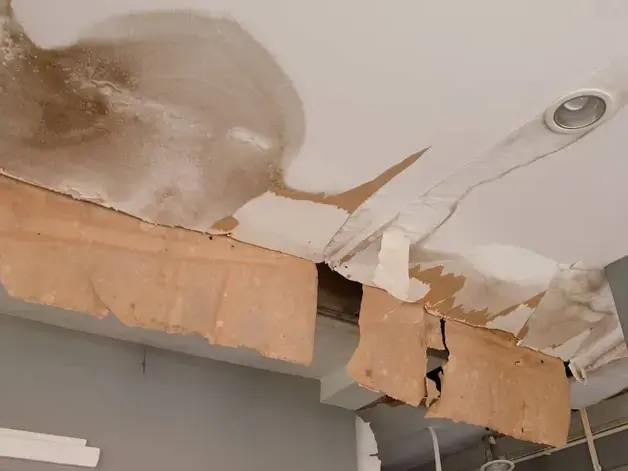
Ceiling water in a Largo home usually comes from one of three places: an attic air handler, a bathroom or kitchen on the floor above, or the roof. The stain is where the water finally showed, not always where it started, so the first job is finding the path.
Where ceiling water comes from
- Attic AC units with blocked condensate lines, covered on the AC condensate page
- Tub, shower and toilet leaks in two-story homes and condos
- Supply pipes running through the attic in slab homes
- Roof leaks after heavy rain, covered on the storm roof leak page
How a wet ceiling is handled
The tech who does the walkthrough uses a thermal camera to outline the wet area and checks the attic side for soaked insulation. Safety comes first: a bulging ceiling can hold a lot of water.
- Controlled draining of a bulge into a bucket before it breaks
- Removal of drywall that sags, crumbles or stays wet
- Wet blown or batt insulation bagged and removed
- Ceiling cavity drying with air movers and LGR dehumidifiers
Popcorn texture on older Largo ceilings can contain asbestos in homes built before the 1980s, so textured ceilings from that era are tested before they are cut. The EPA asbestos page explains why.
Do not poke the light fixture
If water is coming through a light or fan, switch that circuit off at the panel and keep people out from under it.
After it is dry
Drywall repair and paint come after the readings say the framing is dry. Painting over a damp ceiling brings the stain right back. Track the timeline with the drying-time estimator.