Rising water is different from a pipe leak. It carries soil, sewage, fuel and yard debris, so the IICRC treats it as Category 3 no matter how clear it looks. Largo saw that in the record-wet August of 2024, when McKay Creek overtopped into nearby streets, and again when the fall storms pushed surge up the Intracoastal toward Harbor Bluffs and Anona.
Where Largo floods
- The McKay Creek basin in southwest Largo, including Collins Estates
- Low streets near the Intracoastal in Anona and Harbor Bluffs
- The Allen's Creek drainage in northeast Largo
- Low spots near retention ponds during long summer storms
Check your flood zone on the FEMA flood map service, and follow county alerts at pinellas.gov.
How flood cleanup works
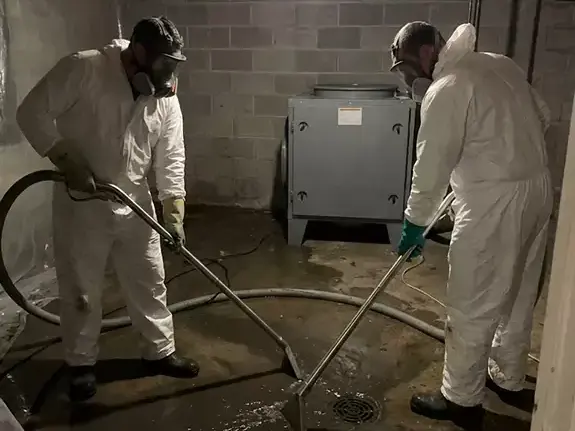
The response team sets containment and PPE first. Then the extraction crew pumps out standing water and removes the silt left behind.
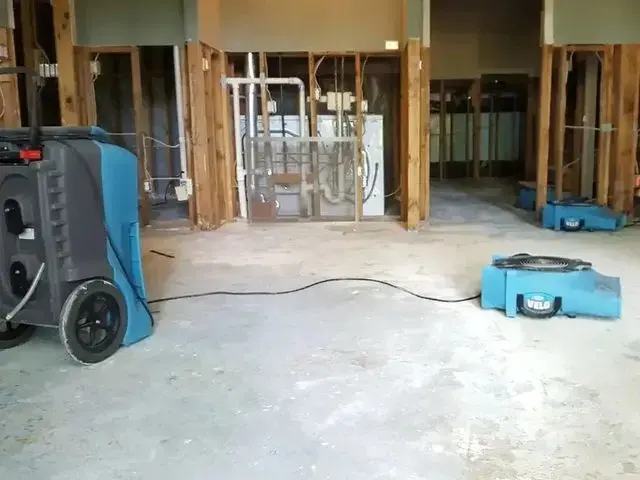
- Flood cuts: drywall removed a set height above the water line
- Wet insulation, carpet and pad bagged and hauled out
- Hard surfaces cleaned and treated with an EPA-registered antimicrobial
- HEPA air scrubbers while materials are removed
- Structural drying of block walls, framing and slab
Concrete block homes, common in Largo, hold water in the cores and dry slowly, so readings run longer than on frame walls. See structural drying.
Flood coverage is separate
Standard homeowners policies usually exclude rising water. Flood policies through the NFIP or private carriers cover it under their own terms. The FEMA flood insurance page explains the difference.
Safety before re-entry
Do not wade through floodwater, keep power off until an electrician clears it, and wear gloves and boots around anything the water touched. Ready.gov lists the basics.