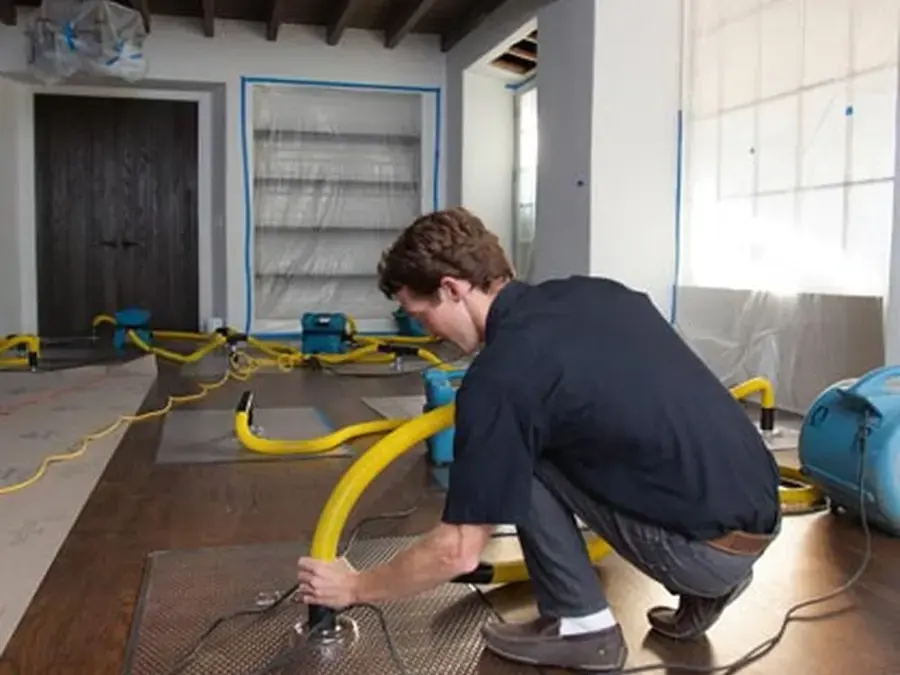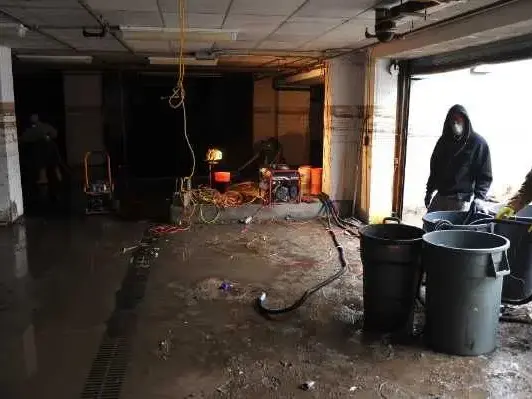
Structural drying is the part of a water loss you cannot see. After extraction, water is still inside drywall, framing, concrete block and slab. In Largo, where outdoor air is humid most of the year, that moisture does not leave on its own. It has to be pulled out with controlled airflow and dehumidification, then measured until it is gone.
What the IICRC S500 standard asks for
- Moisture mapping before any equipment goes down
- Category 1, 2 and 3 water handled differently
- Class 1 through 4 setting how much equipment a room needs
- Drying goals set against a dry reference material in the same building
- Daily monitoring and records until the goal is met
The equipment
The drying team sizes equipment to each room's evaporation load, not a fixed number per room.
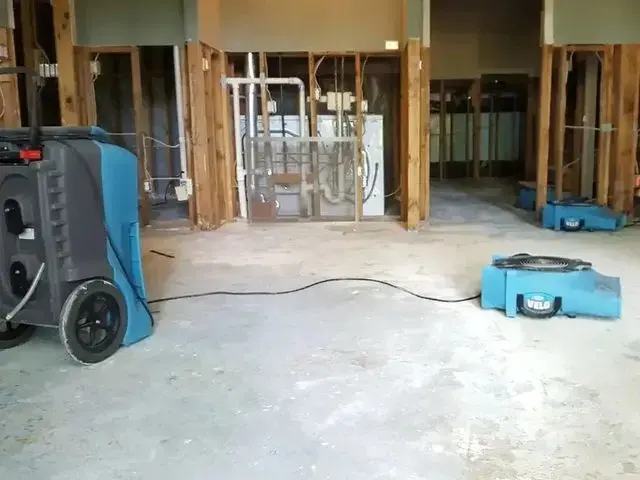
- Air movers aimed across wet surfaces to speed evaporation
- LGR dehumidifiers that keep pulling water from air even as it gets drier
- Desiccant dehumidifiers for Class 4 materials like dense concrete and hardwood
- Wall cavity and under-cabinet drying systems
- Pinless and pin meters, thermo-hygrometers and thermal imaging
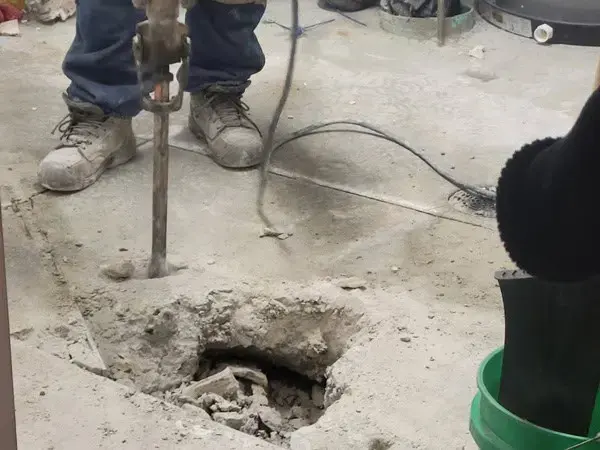
Concrete block walls, the standard in Largo, hold water in their hollow cores and dry slower than wood framing. Slabs dry from the top only, so floor coverings that trap moisture often come up. The drying-time estimator shows how material and category change the timeline.
Why keep the windows shut
Opening windows in Largo usually adds moisture, not removes it. The drying team keeps the building closed so dehumidifiers work on a controlled volume of air.
The drying log
Every day the readings go into a log: material moisture, room temperature, relative humidity and grains per pound. That record is what an adjuster reviews. The EPA's moisture and mold page explains why drying inside 24 to 48 hours matters, and UF/IFAS Extension covers humidity control in Florida homes.