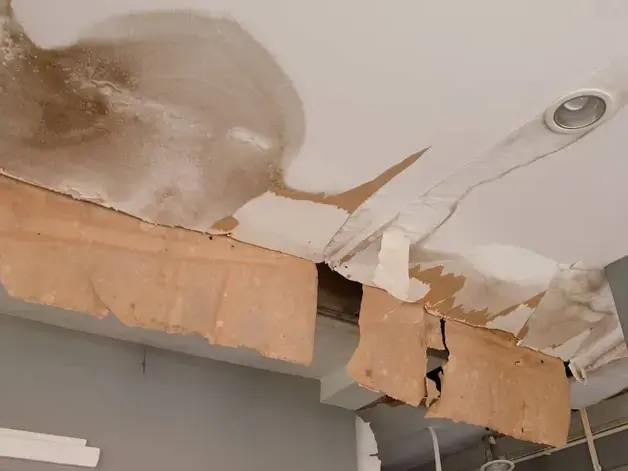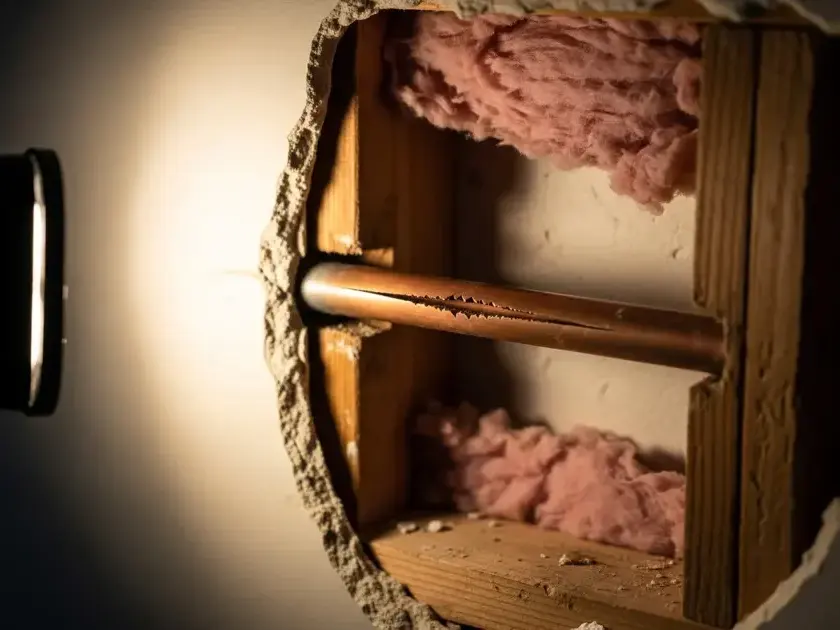
Largo rarely freezes, so pipes here burst for other reasons: age, corrosion and pressure. A pinhole in old copper or a failed fitting inside a wall can run for hours before anyone sees a stain, and a full split soaks a room in minutes. Either way the water is clean at first, which is the best case for drying if the work starts fast.
Why supply pipes fail in Largo homes
Much of Largo was built between the 1960s and the 1980s, and many of those homes still carry original copper or galvanized supply pipe. Some homes built from 1978 to 1995 have polybutylene, a gray plastic pipe known for failing at fittings.
- Pinhole corrosion in aging copper, often in the attic or walls
- Galvanized pipe rusting from the inside until a joint lets go
- Polybutylene fittings cracking without warning
- High water pressure stressing old joints and supply stops
How a burst pipe loss is dried
Once the water is off, the extraction crew pulls standing water from floors and checks the rooms on the other side of the wall. The tech who does the walkthrough uses thermal imaging to follow water inside the cavity.
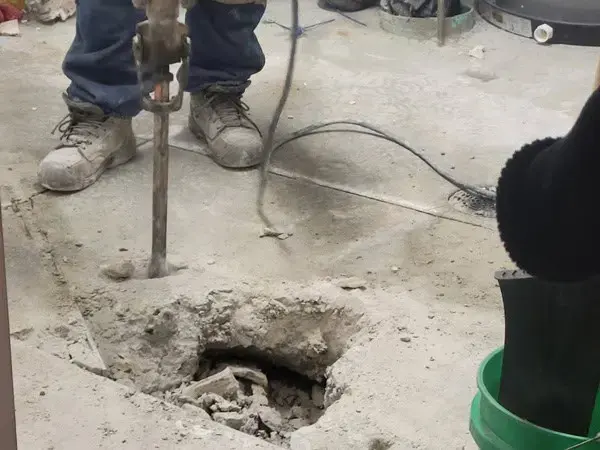
- Controlled flood cuts or small access holes to reach wet framing
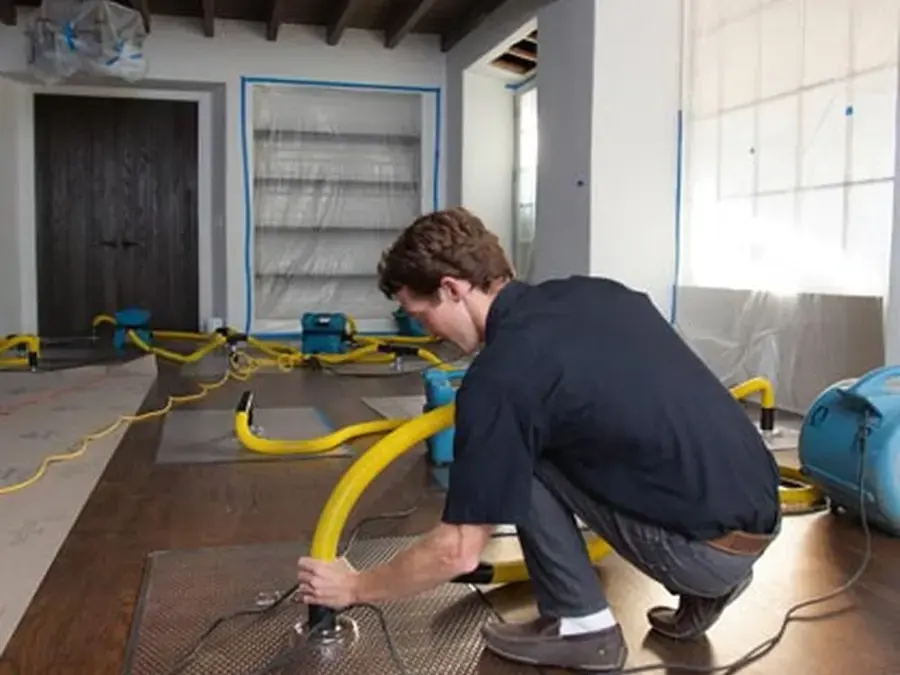
- Cavity drying with directed air, not just fans on the floor
- LGR dehumidifiers sized to the room load
- A plumber repairs the pipe while drying continues
Drywall touched only by clean water is often dried in place when the work starts early. Insulation that soaks through is usually removed. See structural drying for how the drying goal is verified.
Know your main shut-off
In most Largo homes the main valve sits near the meter at the street or where the pipe enters beside the garage. Turn it once a year so it moves when you need it.
Finding slow leaks early
A running water meter with every fixture off points to a hidden leak. The EPA's WaterSense leak checks explain the meter test. If the leak is under the floor, see slab leak water damage.