Largo has one of the largest collections of manufactured-home communities in Pinellas County, many of them 55-plus parks off Ulmerton Road, Walsingham Road and the Seminole Boulevard corridor. These homes are built differently from a block house on a slab, so water damage behaves differently too.
Why manufactured homes are different
- Floor decking is often particleboard that swells and loses strength when wet
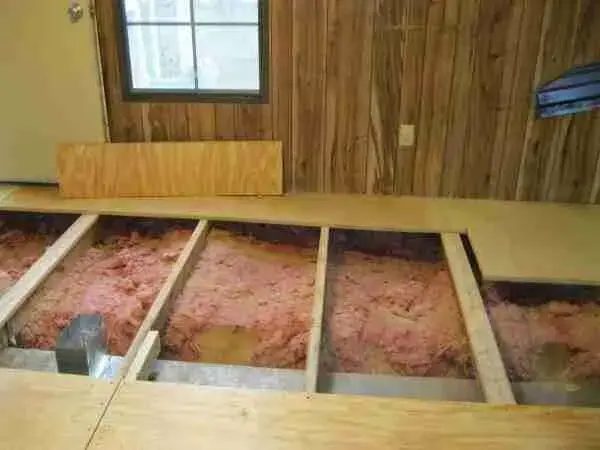
- Supply and drain pipes run under the floor inside the belly wrap
- Insulation in the belly holds water against the floor
- Double-wide homes have a marriage line where the roof and floor halves meet
- Older homes may still have polybutylene supply pipe
How the cleanup is handled
The tech who does the walkthrough checks the floor from above with meters and, where it is safe, looks at the belly from the crawl space. Water that pools in the belly sags the wrap and keeps the floor wet from below.
- Extraction of carpet and vinyl on top of the floor
- Removal of swollen particleboard that cannot recover
- Opening the belly wrap to drain water and remove soaked insulation
- Drying the floor system from above and below
- Resealing the belly after the readings say dry
Many parks have rules about work under the home and skirting removal. The restoration team works within those rules. HUD sets the construction code for these homes; see the U.S. Department of Housing and Urban Development.
Soft spots are a warning
A floor that feels spongy near the bathroom, kitchen or water heater closet usually means the particleboard is already wet underneath.
Roof and storm leaks
Metal and low-slope roofs on manufactured homes can leak along seams and the marriage line during heavy rain. Interior drying follows the storm roof leak process. Storm preparation for manufactured homes is covered at Ready.gov.