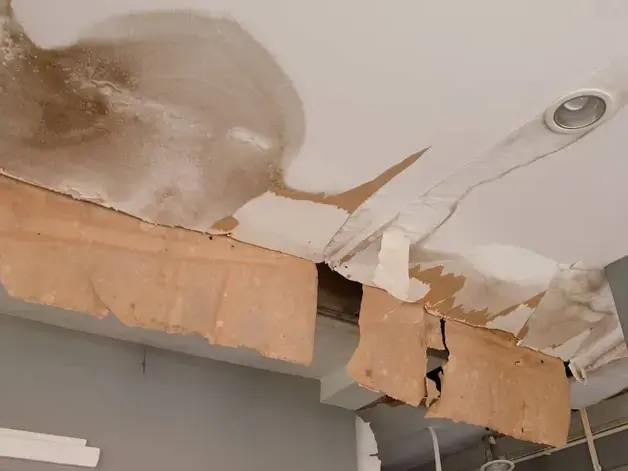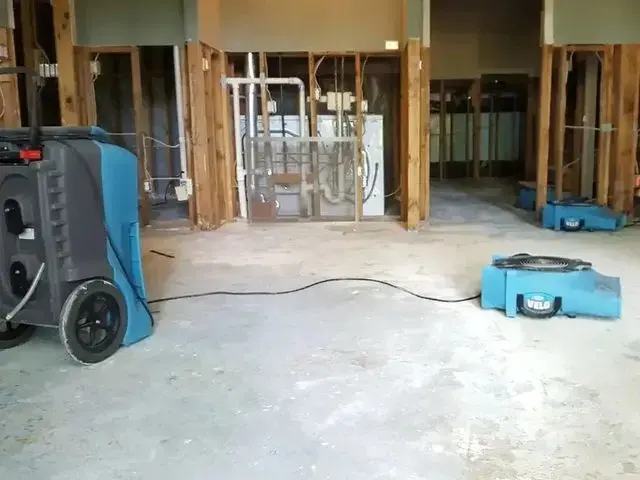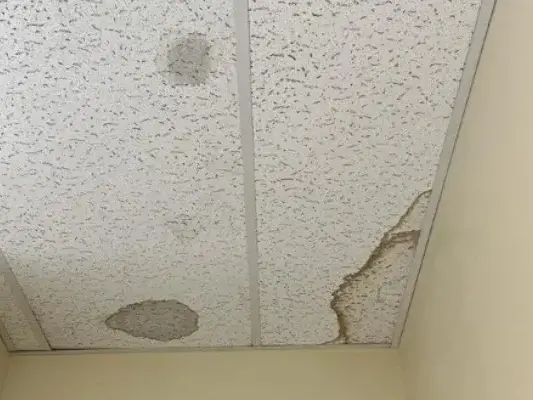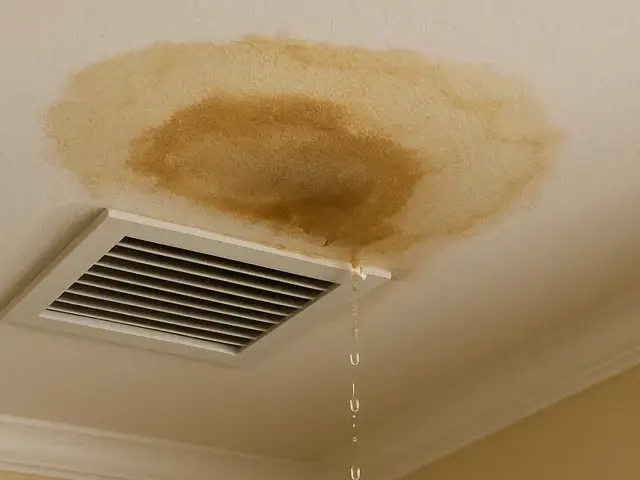
In Pinellas County the air conditioner runs most of the year, and a central system can remove many gallons of water from humid air on a summer day. That condensate drips into a pan and runs out through a small PVC drain line. When algae, dust or a sagging line blocks it, the pan overflows. In an attic unit the water comes through the ceiling. In a closet unit it soaks the floor, the wall and the rooms next to it.
Warning signs
- A brown ring or drip at a ceiling vent or around the air handler closet
- A musty smell when the AC starts
- Water in the secondary pan or a float switch that shuts the AC off
- Swollen baseboard or damp carpet beside the AC closet
How condensate damage is dried
The tech who does the walkthrough checks the ceiling, insulation and walls around the unit with a thermal camera, because condensate leaks usually run for days before they show.
- Wet attic insulation removed where it compressed and soaked
- Ceiling drywall dried in place or cut out if it sags
- Closet floors, baseboard and adjoining walls extracted and dried
- An EPA-registered antimicrobial applied where materials stayed wet
Condensate is usually Category 1 or 2 water, but a slow leak raises the risk of growth inside the wall, so the drying goal matters more than speed alone. Ceiling work follows the same process as ceiling leak water damage.
Clear the line before summer
Many Largo owners flush the condensate line every few months and add a float switch that cuts the AC off before the pan spills. The Department of Energy covers basic AC upkeep.
Why humidity changes the drying plan
Outdoor air in Largo is humid most of the year, so opening windows slows drying. The drying team keeps the house closed, runs LGR dehumidifiers, and uses the AC once it is repaired. The National Weather Service Tampa Bay office tracks the dew points that drive this.