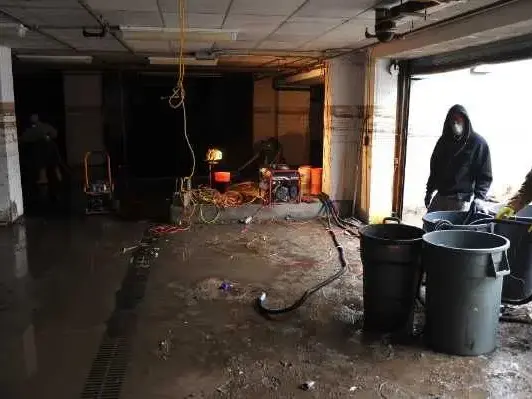
Many Largo homes from the 1960s and 1970s still drain through cast iron pipe under the slab. After 50 or more years, cast iron scales, cracks and collects roots, and the first sign is often a toilet or tub drain that backs up. Sewage carries bacteria and viruses, so it is never a mop-and-fan job.
Common causes in Largo
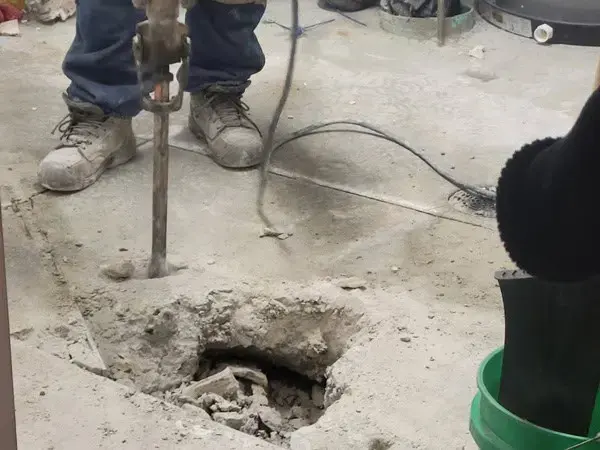
- Cracked or scaled cast iron drains under the slab
- Root intrusion in older clay or cast iron laterals
- Grease and wipes blocking the main line
- Heavy rain overwhelming the sewer during storms
The Category 3 protocol
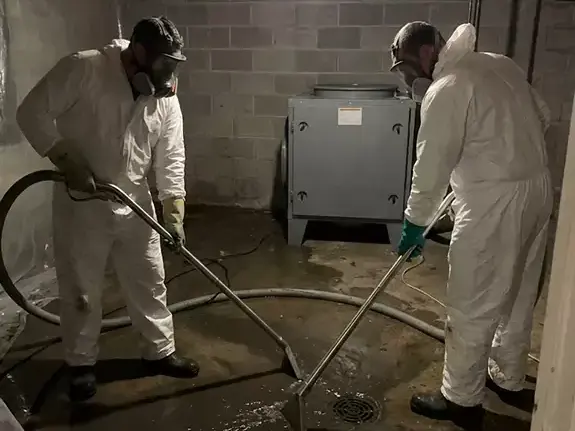
The response team isolates the area before anything is moved, and every tech wears PPE: gloves, boots, eye protection and a respirator at minimum.
- Containment barriers and HEPA air scrubbers to keep contamination in the work area
- Extraction of liquid waste and solids
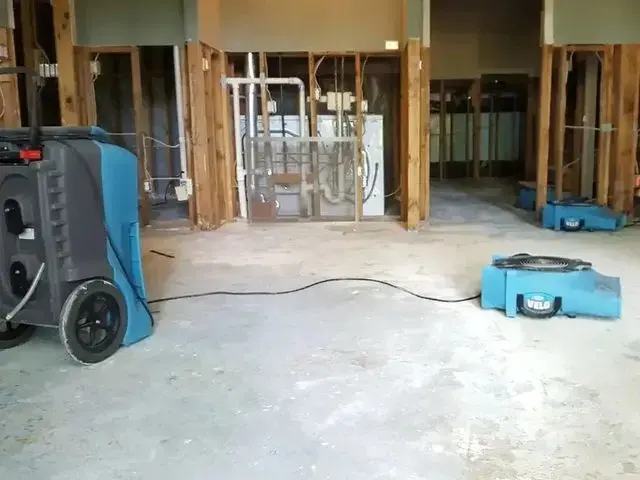
- Removal of carpet, pad, drywall, insulation and trim the sewage touched
- Cleaning of hard surfaces, then an EPA-registered antimicrobial at its label dwell time
- Structural drying and final moisture readings
Porous materials touched by Category 3 water get removed, not dried. Tile and sealed concrete can usually be cleaned. OSHA publishes the worker safety rules for this kind of cleanup.
Keep everyone out
Children, older adults, pets and anyone with a weakened immune system should stay out of the affected area until cleaning and drying are complete.
After the cleanup
A plumber clears or repairs the drain, often with a camera inspection of the cast iron. If the backup came with floodwater, the work follows storm flood cleanup. The EPA registers the antimicrobial products used in this work.